venerdì 11 settembre 2020

11 settembre Santi Martiri dal XVII al XXI secolo


Immagine


Saints NICOLAS et VICTOR, prêtres, martyrs par la main des Communistes (Russie 1918).


Saint CARPUS, prêtre, martyr par la main des Communistes (Russie 1937

mercoledì 9 settembre 2020

9 settembre Santi Feste e Memorie


  • Synaxe des justes ancêtres de Dieu, JOACHIM et ANNE. (Office traduit en français par le père Denis Guillaume au tome IX des Ménées.)

    Anna e Gioacchino sono i genitori della Vergine Maria. Gioacchino è un pastore e abita a Gerusalemme, anziano sacerdote è sposato con Anna. I due non avevano figli ed erano una coppia avanti con gli anni. Un giorno mentre Gioacchino è al lavoro nei campi, gli appare un angelo, per annunciargli la nascita di un figlio ed anche Anna ha la stessa visione. Chiamano la loro bambina Maria, che vuol dire "amata da Dio". Gioacchino porta di nuovo al tempio i suoi doni: insieme con la bimba dieci agnelli, dodici vitellie centro capretti senza macchia. Più tardi Maria è condotta al tempio per essere educata secondo la legge di Mosè. Sant'Anna è invocata come protettrice delle donne incinte, che a lei si rivolgono per ottenere da Dio tre grandi favori: un parto felice, un figlio sano e latte sufficiente per poterlo allevare. È patrona di molti mestieri legati alle sue funzioni di madre, tra cui i lavandai e le ricamatrici.
    Ss. Joachim & Anna were childless for 50 years of their married life. Then the Archangel Gabriel appeared to them, each separately, and foretold the birth of a daughter. God had heard their prayers. They had always been very devout and gave one third of their income to the Temple, one third to the poor and lived on the remaining third. St. Joachim lived to be 80 and St. Anna lived to be 79. In response to the blessing and the Archangel's prophecy, they dedicated Mary to the Lord and presented her to be raised in the Temple from a young child.  Troparion of Ss. Joachim & Anna (Tone 5)

    Let us sing praises to Joachim and Anna, the couple honoured by God (and they are His kinsmen). They have borne for us the Maiden who in a manner beyond understanding gave birth to Him Who though fleshless became incarnate to save the world. With her they intercede for our souls http://stmaterne.blogspot.com/2006/09/anne-et-joachim-marie-et-les-frres-de.html Saints HYACINTHE, ALEXANDRE et TIBURCE, martyrs dans le Latium. 


    Saint AUDITEUR, frère des saints Baudime et Nectaire, compagnon d'apostolat de saint Austremoine d'Auvergne (après 250)        
    Saint THEOPHANE le Confesseur, qui pratiqua l'ascèse et confessa le Christ avant le règne de Dioclétien (mort vers 299). martyr CHARITON, mort par le glaive.   
    Saint PELAGE, martyr à Coutances en Normandie (IVème siècle). Saint grand-martyr SEVERIEN, sénateur à Sébaste en Grande Arménie, martyr à Césarée de Cappadoce sous Licinius (320). (Office traduit en français par le père Denis Guillaume au tome IX des Ménées.)      Mémoire des DEUX CENTS Pères théophores réunis à Ephèse sous le règne de l'empereur Théodose le Jeune pour le troisième saint concile oecuménique, qui anathématisa l'impie Nestorius, évêque de Constantinople (431).Saint VERAN, fils de saint Eucher de Lyon, moine de Lérins et évêque de Vence près de Nice (vers 480). 


    Saint GREGOIRE, confesseur à Alcala del Rio en Andalousie (vers 504). 

    Saint ANTIMOND (AUTIMOND, ANTIMUNDUS, AUTIMUNDUS), premier évêque connu de Thérouanne en Artois (531).KIARAN, un des Douze Apôtres de l'Irlande, fondateur du monastère de Clonmacnoise sur la rive gauche du Shannon (549) http://religion-orthodoxe.eu/article-saint-kierian-fondateur-du-monastere-de-clonmacnoise-en-irlande-544-49899363.htmlSt. Kieran attended the monastic school of St. Finian at Clonard, and is accounted one of the 12 "Apostles of Erin." On Jan. 25, 545, he founded the coenobium of Clonmacnois. He was a great miracle worker and ascetic. There was a more beautiful spot for his monastery, but the Saint refused it, on the grounds that the monks would enjoy too many of the good things of this fleeting life, and neglect the heavenly things. St. Seraphim is known for the bear that served him; St. Kieran for the dun cow which accompanied and served him. On the verge of his repose, he looked up and said, "Awful is this road upward!" The brethren said, "It is not awful for you." He replied, "Indeed I do not know that I have transgressed any of God's commandments, yet even David son of Jesse, and Paul the Apostle, dreaded this journey." As he passed from this world he said, "He that shall persevere to the end, he shall be saved!" Holy Kieran, pray for us that we may persevere in the Faith which bore thee aloft, and may not be overwhelmed by the world which lies in evil!


    Saint ULPHACE (ULFACE), ermite dans le Maine (VIIème siècle). 

    Sainte AGARIARGA (OSMANE), princesse irlandaise, qui se rendit sur le continent avec sa servante sainte Cérotte (cf. 22 juin) pour y mener la vie ascétique près de Saint-Brieuc en Bretagne (vers 650). 
    Sa Vita a été écrite un bon siècle après sa mort. Son diocèse était limité par la mer; la Canche au Sud; vers l'Est, l'Yser jusqu'à Dixmude, les collines de Flandre, à l'est de l'Yperlée jusqu'à la Lys près de Warneton. Entre Lys et Canche, la frontière passait entre Thérouanne et Arras
    Chateaubriand écrivait, à propos de son Génie du christianisme : "Auprès du monde croulant du paganisme, s'éleva autrefois, comme en dehors de la société, un autre monde, spectateur de ces grands spectacles, pauvre, à l'écart, solitaire, ne se mèlant des affaires de la vie que quand on avait besoin de ses leçons ou de ses secours. C'était une chose merveilleuse de voir ces premiers évêques, presque tous honorés du nom de saints et de martyrs, ces simples prêtres veillant aux reliques et aux cimetières, ces religieux et ces ermites dans leurs couvents ou dans leurs grottes, faisant des règlements de paix, de morale, de charité, quand tout était guerre, corruption, barbarie; allant des tyrans de Rome aux chefs des Tartares et des Goths, afin de prévenir l'injustice des uns et la cruauté des autres, arrêtant des armées avec une croix de bois et une parole pacifique; les plus faibles des hommes et protégeant le monde contre Attila; placés entre 2 univers pour en être le lien, pour consoler les derniers moments d'une société expirante et soutenir les premiers pas d'une société au berceau. » (Mém. d'outre-tombe, 2e part., 1. 1, c. 12, éd. M. Levaillant, 1948, t. 2, p. 47; cf. fin du dernier Disc. hist., dans Oeuvres complètes, t. 5 bis, p. 200; M. Dollinger, Les études historiques de Chateaubriand, Paris, 1932, in-8°, 374 p.).


    Saint OMER (OMAR, AUDEMAR, AUDOMARUS), natif du Cotentin, moine de Luxueil en Franche-Comté, puis évêque de Thérouanne en Artois, fondateur d'un monastère qui allait donner naissance à la ville de Saint-Omer (667 ou 670). (Office composé en français par le père Denis Guillaume et publié au tome XVI du Supplément aux Ménées.) Saint BERTELLIN (BETTELIN, BERTRAM, BECCELIN, BERTAUME, BERTELMUS), disciple de saint Guthlac de Crowland, ermite et confesseur (VIIIème siècle). 


    Saint FROGENT, évêque de Sées en Normandie (763).
    Saint JOSEPH, higoumène de Volokolamsk, thaumaturge, confesseur de la foi orthodoxe face à l'hérésie des Judaïsants (Russie 1515). (Office traduit en français par le père Denis Guillaume au tome IX du Supplément aux Ménées. Acathiste traduit en français par le même au tome XVI du Supplément aux Ménées. Saint JOACHIM, fondateur du monastère d'Opochka près de Pskov (Russie 1550).


    Invention des reliques de saint Théodose, archevêque de Tchernigov (Ukraine 1896). (Office traduit en français par le père Denis Guillaume au tome XVI du Supplément aux Ménées.) 

    Saints GREGOIRE, prêtre, et ALEXANDRE, diacre, martyrs par la main des Communistes (Russie 1918). 

    Saints ZACHARIE, archevêque de Voronège, BASILE, SERGE, JOSEPH et ALEXIS, prêtres, et BASILE, laïque, martyrs par la main des Communistes (Russie 1937

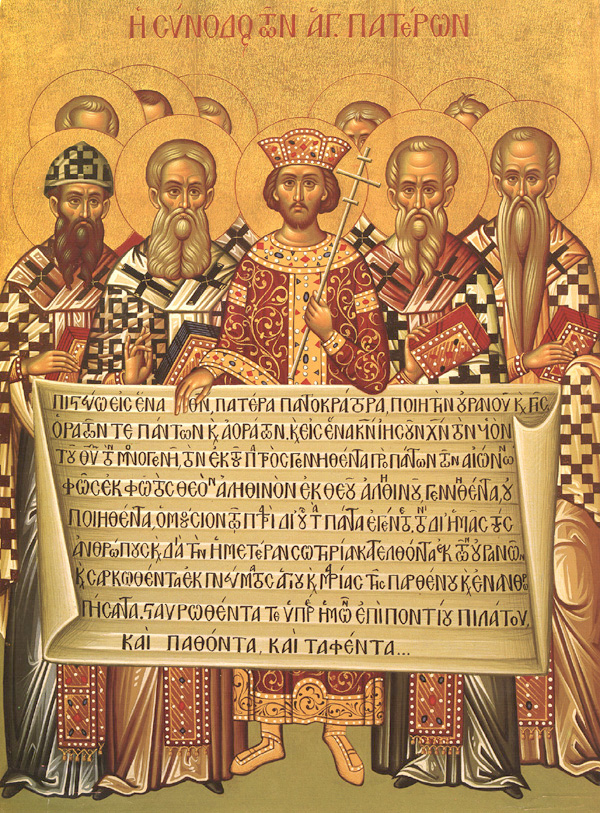
  • Mémoire des DEUX CENTS Pères théophores réunis à Ephèse sous le règne de l'empereur Théodose le Jeune pour le troisième saint concile oecuménique, qui anathématisa l'impie Nestorius, évêque de Constantinople (431). Saint THEOPHANE le Confesseur, qui pratiqua l'ascèse et confessa le Christ avant le règne de Dioclétien (mort vers 299). 


martedì 8 settembre 2020

lunedì 7 settembre 2020

7 settembre Santi Martiri dal XVII al XXI secolo


Saint MACAIRE, higoumène du monastère de Kanev en Volyhnie, martyr par la main des Musulmans (1678). (Office traduit en français par le père Denis Guillaume au tome XVI du Supplément aux Ménées.) 
Santo Ieromartire Macario Archimandrita di Kanev. Visse nei terribili e sanguinosi anni in cui l'Ortodossia era attaccata : da occidente dai Cattolici utilizzanti sia il ritualismo dell'Unia (vuoto simulacro dell'Ortodossia) che le armi polacche e da oriente dai Turchi. A martirizzarlo furono i Turchi.


Saint MACAIRE du monastère d'Optina (Russie 1860).

Saint JEAN MASLOVSKI, prêtre, martyr par la main des Communistes (Russie 1921).

Saints EUGENE, métropolite de Gorki (Nijni-Novogorod), ETIENNE, prêtre, et EUGENE, NICOLAS et PACÔME, moines, martyrs par la main des Communistes (Russie 1937).

Saint GREGOIRE, prêtre, martyr par la main des Communistes (Russie 1937

domenica 6 settembre 2020

6 settembre Santi Martiri dal XVII al XXI secolo


Saint MAXIME SANDOVITCH, prêtre, martyr par la main des Catholiques-Romains sous François-Joseph Ier (Ruthénie subcarpathique 1914).
Il naquit en Ruthénie, entre la Pologne et la Slovaquie, dans cette région alors rattachée à l'empire austro-hongrois. Gréco-catholique par sa famille, il entra dans un monastère de sa région natale, mais déçu par la vie de ces moines, il se tourna vers l'Orthodoxie et entra au monastère de Potchaev en Ukraine occidentale. Le métropolite de Kiev le remarqua et l'ordonna prêtre pour desservir les communautés orthodoxes issues du catholicisme. Il fut arrêté et emprisonné à Lvov pour avoir célébré dans une Eglise interdite par la loi, accusé de collaborer avec les Russes ennemis des Autrichiens. Après deux ans d'un dur emprisonnement, il fut libéré, mais lorsqu'éclata la première guerre mondiale, il fut à nouveau arrêté et fusillé sur le  champ.
St. Maxim was born in the village of Zhdynia, Galicia. It was under the Austro-Hungarian Empire, but it had been part of the Ukraine. The Austro-Hungarians did all they could to root out any sympathy for Russia. They further latinized the uniate liturgy and they viewed all Orthodox as Russian conspirators. Maxim's parents, Timko & Christina, were devout people. They saw to it that Maxim received a good education, but they could not afford much. His father arranged for him to stay in the Russian Dormitory provided for poor students at the high school in Nowy Sacz. There Maxim learned Russian history and the history of the Church. But he realized that this school was still too expensive for his family, so after his first year, he transfered to the uniate school run by Basilian monks. He found their teachings and their way of life repugnant. He left after a few weeks. He found his way across the border to Russia and entered the Lavra at Pochaev. From there, Archbishop Anthony Khrapovitsky sent him to the Orthodox seminary at Zhitomir in 1905. He graduated in 1910. When he visited his home for Pascha and Bright Week, the people of the area were excited to have an Orthodox seminary graduate in their midst. Some who had grown up in the unia, had traveled to America and had made their confessions to Orthodox priests there. They urged Maxim to seek ordination and return to Hrab and start an Orthodox Church. He promised them he would. The following year he was married and ordained. When he and his wife arrived in town, his appearance caused an uproar. The uniate clergy mocked him for his beard, long hair and riassa, saying, "Look! St. Nicholas has come to the Carpathians!" The church grew and flourished to the point that crowds stood around the windows outside to catch a glimpse and to join in the services. He was repeatedly arrested and harrassed on false charges. The uniate clergy had him and several parishioners arrested for burning candles in church. He was arrested in 1912 for capital espionage along with a priest in a neighboring town when he went there to make his confession. They were held for two years. They were finally brought to trial and found innocent. He was released on June 6, 1914, and he returned to Hrab. He was only able to minister a short time, when he was arrested again; this time, with his pregnant wife and his father, on August 4, (three days after Austria-Hungary had declared war on Russia).They were all kept in one cell until 5am on the 6th when Timko and Mrs. Sandovich were moved to a cell with a window facing the street. They then took Maxim out, blindfolded. Placed him with his back against the wall. He knew this was the end and he said: "Lord bless." Just before the order to shoot was given, he shouted: "Long live Orthodox Rus!" Two men shot him from six paces away. His body did not fall over as it was leaning against the wall so one of the soldiers went over to him and shot him three times in the head with his revolver. St. Maxim's son, Maxim, later returned and pastored a thriving Orthodox community there

Troparion — Tone 4

By the Providence of God you were sent to the Mountain of Pochaev / for the knowledge of the truth of the Orthodox faith, / and receiving true teaching in the city of Zhitomir, / as a soldier of Christ you came to our land. / For Orthodoxy and your own people you accepted a martyr's crown. / Therefore you confirmed your native land in Orthodoxy. / O Priest-Martyr Maksym, entreat Christ God that our souls may be saved!

Kontakion — Tone 2

Your Martyrdom, O Father Maxsym, / enlightened and roused up our people to the Orthodox Faith. / giving up your own life to Christ God, / you endured torments and the suffering of imprisonment. / Pray for us and for your land before Christ God!


Saint DEMETRE, prêtre, martyr par la main des Communistes (Russie 1918).

Saints CONSTANTIN, JEAN et VSEVOLOD, prêtres, martyrs par la main des Communistes (Russie 1937).
sabato 5 settembre 2020

5 Settembre Santi Martiri dal XVII AL XXI secolo


Saint ATHANASE, higoumène du monastère Saint-Syméon-Stylite à Brest-Litovsk en Biélorussie, martyr par la main des Polonais catholiques-romains pour avoir refusé la fausse union avec la Papauté (1648). (Office et acathiste traduits en français par le père Denis Guillaume au tome XVI du Supplément aux Ménées.)

Saint EUTHYME, martyr par la main des Communistes (Russie 1937).

mercoledì 2 settembre 2020

3 Settembre Santi Martiri dal XVII al XXI secolo


Saint POLYDORE, natif de Nicosie et négociant de profession, martyr à la Nouvelle-Ephèse en l'île de Chypre par la main des Musulmans (1794). 


Saint PIMENE, évêque de Verninsk, martyr par la main des Communistes (Russie 1918).


Saint ALEXIS, prêtre, martyr par la main des Communistes (Russie 1937). 

Invention des reliques de saint Nectaire d'Egine (Egine, golfe Saronique, 1953). (Office traduit en français par le père Denis Guillaume au tome XVI du Supplément aux Ménées.)