Saint
ROMULUS, préfet du palais impérial, martyr sous Trajan à qui il avait
reproché sa cruauté à l'égard des chrétiens (entre 98 et 117). (En
Occident, mémoire le 5 septembre.)
Mémoire
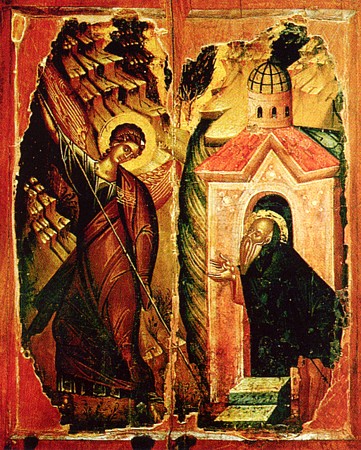
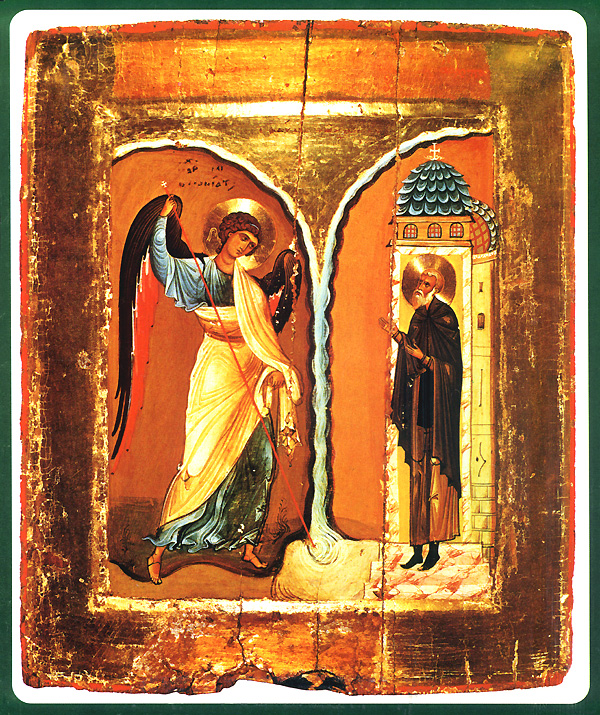
du miracle accompli par l'Archange Michel à Colosses en Phrygie (vers
la fin du IIème siècle). (Office traduit en français par le père Denis
Guillaume au tome IX des Ménées.)
Ben
prima dell´incarnazione di Cristo, l´Arcangelo Michele dimostrò nella
pratica il suo interesse e la benevolenza per il genere umano, e dopo la
venuta nel mondo del Salvatore, i segni del suo amore per i cristiani,
si fecero ancora più grandi. L´Apostolo Giovanni, essendosi trovato in
Frigia ad annunciare il Vangelo, profetizzò una nuova visita del
principe degli Arcangeli Michele, in un luogo chiamato Chérétope.
Difatti, nei giorni seguenti, zampillò miracolosamente dal terreno una
sorgente che guariva tutte le malattie. Un fedele, la cui figlia era
stata guarita dall´acqua della sorgente, fece costruire in quel luogo,
in segno di riconoscenza, una piccola chiesa dedicata all´Arcangelo
Michele. Novant´anni dopo, venne a stabilirsi un
giovane di nome Archippo, nativo di Ierapoli, affinché potesse praticare
l´ascesi e servire in qualità di sacrestano. Lo zelo e l´amore di Dio
erano in lui così grandi che presto acquisì il potere dei miracoli. Alla
vista di tali prodigi di tali grazie che abbondavano in virtù della
sorgente miracolosa, il diavolo, furioso, satenò l´invidia dei pagani.
Dopo aver ripetutamente insultato e colpito il giovane Archippo, una
notte cercarono di otturare la sorgente ma invano perché il santo
Arcangelo Michele era invisibilmente presente per impedire che ciò
avvenisse. Tuttavia, i pagani non si scoraggiarono e tentarono di
deviare il corso dell´acqua perché inondasse la chiesa e i fedeli che vi
pregavano; ma l´impresa fallì. Ancora una volta deviarono il corso di
due piccoli torrenti che scorrevano al di sopra della chiesa: per questo
costruirono una diga e si prepararono a romperla per far travolgere la
chiesa dalle acque. Ma l´Arcangelo
Michele apparve ad Archippo, lo rassicurò, e come una colonna di fuoco,
si pose davanti alle acque furiose che discendevano dalla collina. Nel
momento in cui le acque giunsero in prossimità dell´Arcangelo, questo
colpì con lo scettro una pietra e, nella roccia, si aprì una voragine
che, come una gola naturale, lasciò passare l´acqua, salvando così la
chiesa. Questo luogo fu, per questo motivo, chiamato "cratere", per la
gloria di Dio e in onore del nostro protettore il Santo Arcangelo
Michele.
Troparion (Tone 4)Michael
Prince of the armies of heaven, thou didst over-shadow the Church like a
cloud raining waters of immortality. Thou didst preserve it as another
ark and turn rivers aside with thy spear, to
the glory of the Faith and the rejoicing of the faithful
There
was a miraculous spring near Hierapolis in Phrygia. It had come forth
after a prophecy at that place by St. John the Theologian and St. Philip
the Apostle that a healing spring would be there and that Archangel
Michael would appear there. Soon after the spring gushed forth. many
came to be healed. A wealthy pagan in Laodicea had a mute daughter.
Michael urged him in a dream to take his daughter to this spring. When
he arrived there, he found a large gathering of Christian people. He
asked how she should be healed. They told him: "In the Name of the
Father, and of the Son, and of the Holy Spirit, you
must beg the Archangel Michael." He did this and dipped his daughter in
the water and she was healed. They were both baptized and discipled in
the Faith, along with his whole household. He had St. Michael's Church
built over the spring. Later, Archippus settled there, as a young man.
The pagans in the region did not like such power from a Christian holy
place and the pilgrims it attracted. They constructed a dike to alter
the course of a river to flood the church and the spring. But Archippus
prayed. The Archangel Michael appeared and opened a fissure in the rock a
the end of the church. The river plunged through that rock and the
church & spring were saved. That is how the place got its name;
Chonae means plunging. St. Archippus lived peacably in asceticism there
until the age of 70 and reposed in the Lord.
Michael, commander of the heavenly hosts, / we who are unworthy
beseech you, / by your prayers encompass us beneath the wings of your
immaterial glory, / and faithfully preserve us who fall down and cry out
to you: / “Deliver us from all harm, for you are the commander of the
powers on high!”
Kontakion — Tone 2
Michael, commander of God’s armies / and minister of the divine
glory, / prince of the bodiless angels / and guide of mankind, / ask for
what is good for us, and for great mercy, / as supreme commander of the
Bodiless Hosts.
Divina fonte di grandi miracoli sei diventato nel tuo santuario in Chone dove non solo hai annientato con la tua forza il drago grande e terribile che lì dimorava, ma dove si è formato un corso d’acqua guaritrice di ogni malattia del corpo, perché tutti con fede al Sovrano degli Angeli che ti ha glorificato dicano: Alliluia!
Così recita un kondakion dell’inno akatistos a san Michele Arcangelo. Il kondakion fa riferimento al Miracolo dell'arcangelo Michele a Cone (Τὸ ἐν Χωναῖς/Χῶναις Θαῦμα τοῦ Ἀρχαγγέλου Μιχαήλ) di cui il sinassario fissa la memoria al 6 settembre.
A Cone, l'antica Colossi in Frigia, sorgeva sopra una sorgente miracolosa un santuario dedicato all'Archistratega. Il santuario era stato costruito da un abitante della città di Laodicea che aveva ricevuto la grazia della guarigione della figlia muta.
Per 60 anni servì come custode di questo santo luogo il pio Archippo, che con la predicazione e il suo esempio convertì molti pagani.
La tradizione narra che alcunipagani adirati per l'attività di Archippodeviarono il corso dei fiumi Lykokaperos e Kufos contro il santuario di san Michele per distruggerlo. Archippo pregò con fervore l'Arcangelo Michele cheapparve e con un fulmine spaccò la roccia dando un nuovo letto al corso d'acqua, mettendo in salvo la chiesa e santificando per sempre l'acqua che sgorgava dalla roccia.
Nell’arte bizantina e russa, il tema del Miracolo dell'arcangelo Michele a Cone riveste notevole importanza.
IlMonastero di ČudovalCremlino, in cui eranobattezzatiglizar, è dedicato al Miracolo di Cone.
Sainte
BEYA (BEGA, BEGH, BEE), Irlandaise de nation, fondatrice et première
abbesse du monastère de Copeland en Cumbrie; éponyme de St Bee's Head en
Cumbrie (aujourd'hui Cumberland) et de Kilbees en Ecosse (vers 650).
Saint
MAGNE (MAUG, MANG, MAGNUS, MAGNOALD), disciple de saint Gall, moine à
Luxeuil, apôtre en Italie, en Suisse et en Souabe, ermite à
Kempten-sur-le-Lech en Bavière et fondateur du monastère de Füssen en
Bavière (666). Saint GONDULPHE, évêque de Metz en Lorraine, enseveli à Gorze (823).
Saints
FAUSTUS, prêtre, BIBOS, hiérodiacre, DENYS, lecteur, CYRIAQUE, disciple
de saint Faustus, ANDRONIC (ANDRE), soldat, THEOCTISTE, marin, MACAIRE,
citoyen, ANDRE, coiffeur, SARAPABON, conseiller municipal, CYRIAQUE,
homme du peuple, ANDROPELAGIA et THECLE (THEOTHECLE), vierges et soeurs
par la chair, et CALODOTIE, femme chypriote enceinte, martyrs à
Alexandrie d'Egypte sous Dèce (vers 250).
Saints SANCTIEN et AUGUSTIN, Espagnols de nation, martyrs à Sens en Bourgogne lors de la persécution d'Aurélien (273).
Sainte BEATE, vierge, soeur de saint Sanctien, martyre à Sens (273).
Sainte EVE, martyre à Dreux en Beauce (IVème siècle).
Saints
EUDOXE, ZENON, MACAIRE et leurs MILLE CENT TRENTE-QUATRE compagnons,
martyrs à Mélitène en Arménie sous Dioclétien (entre 303 et 305).
(Office à saint
Eudoxe de Mélitène traduit en français par le père Denis Guillaume au
tome IX du Supplément aux Ménées.)
Saint PETRONE, évêque de Vérone en Vénétie (vers 450).
Saints
DONATIEN, PRESIDE, MANSUET, GERMAIN et FUSCULUS, évêques d'Afrique, qui
confessèrent la foi orthodoxe face à l'arianisme et furent exilés sous
Hunéric (484).
Saint LETUS, évêque en Afrique, martyr par la main des Ariens sous Hunéric (484).
Saint THEGONNEC, Gallois de nation, évêque-abbé itinérant, apôtre en Bretagne (VIème siècle).
Saint ELEUTHERE, abbé à Rome, thaumaturge (vers 585).
Saint ODMAËL, évêque d'Aleth en Bretagne (VIIème siècle).
Saints
FELIX, hiéromoine, et ANGEBERT (AUBERT), hiérodiacre, Anglo-Saxons de
nation, esclaves libérés par saint Grégoire Dialogue, martyrs près de
Langres en Bourgogne sur le chemin d'une mission en
Angleterre (VIIème siècle).
Saint FAUSTE, abbé du monastère Sainte-Lucie de Syracuse en Sicile (vers 607).
Saint
CAGNOALD (CANDALD, CAGNOU, CHAGNOALD, CAGNON), frère de sainte
Burgondofare, disciple de saint Colomban, évêque de Laon en Picardie
(vers 633).
Saint
MAXIME SANDOVITCH, prêtre, martyr par la main des Catholiques-Romains
sous François-Joseph Ier (Ruthénie subcarpathique 1914).
Il
naquit en Ruthénie, entre la Pologne et la Slovaquie, dans cette région
alors rattachée à l'empire austro-hongrois. Gréco-catholique par sa
famille, il entra dans un monastère de sa région natale, mais déçu par
la vie de ces moines, il se tourna vers l'Orthodoxie et entra au
monastère de Potchaev en Ukraine occidentale. Le métropolite de Kiev le
remarqua et l'ordonna prêtre pour desservir les communautés orthodoxes
issues du catholicisme. Il fut arrêté et emprisonné à Lvov pour avoir
célébré dans une Eglise interdite par la loi, accusé de collaborer avec
les Russes ennemis des Autrichiens. Après deux ans d'un dur
emprisonnement, il fut libéré, mais lorsqu'éclata la première guerre
mondiale, il fut à nouveau arrêté et fusillé sur le champ.
St.
Maxim was born in the village of Zhdynia, Galicia. It was under the
Austro-Hungarian Empire, but it had been part of the Ukraine. The
Austro-Hungarians did all they could to root out any sympathy for
Russia. They further latinized the uniate liturgy and they viewed all
Orthodox as Russian conspirators. Maxim's parents, Timko &
Christina, were devout people. They saw to it that Maxim received a good
education, but they could not afford much. His father arranged for him
to stay in the Russian Dormitory provided for poor students at the high
school in Nowy Sacz. There Maxim learned Russian history and the history
of the Church. But he realized that this school was still too expensive
for his family, so after his first
year, he transfered to the uniate school run by Basilian monks. He found
their teachings and their way of life repugnant. He left after a few
weeks. He found his way across the border to Russia and entered the
Lavra at Pochaev. From there, Archbishop Anthony Khrapovitsky sent him
to the Orthodox seminary at Zhitomir in 1905. He graduated in 1910. When
he visited his home for Pascha and Bright Week, the people of the area
were excited to have an Orthodox seminary graduate in their midst. Some
who had grown up in the unia, had traveled to America and had made their
confessions to Orthodox priests there. They urged Maxim to seek
ordination and return to Hrab and start an Orthodox Church. He promised
them he would. The following year he was married and ordained. When he
and his wife arrived in town, his appearance caused an uproar. The
uniate clergy mocked him for his beard, long hair and riassa, saying,
"Look! St. Nicholas has come to the Carpathians!" The
church grew and flourished to the point that crowds stood around the
windows outside to catch a glimpse and to join in the services. He was
repeatedly arrested and harrassed on false charges. The uniate clergy
had him and several parishioners arrested for burning candles in church.
He was arrested in 1912 for capital espionage along with a priest in a
neighboring town when he went there to make his confession. They were
held for two years. They were finally brought to trial and found
innocent. He was released on June 6, 1914, and he returned to Hrab. He
was only able to minister a short time, when he was arrested again; this
time, with his pregnant wife and his father, on August 4, (three days
after Austria-Hungary had declared war on Russia).They were all kept in
one cell until 5am on the 6th when Timko and Mrs. Sandovich were moved
to a cell with a window facing the street. They then took Maxim out,
blindfolded. Placed him with his back against the
wall. He knew this was the end and he said: "Lord bless." Just before
the order to shoot was given, he shouted: "Long live Orthodox Rus!" Two
men shot him from six paces away. His body did not fall over as it was
leaning against the wall so one of the soldiers went over to him and
shot him three times in the head with his revolver. St. Maxim's son,
Maxim, later returned and pastored a thriving Orthodox community there
Troparion — Tone 4
By the Providence of God you were sent to the Mountain of Pochaev /
for the knowledge of the truth of the Orthodox faith, / and receiving
true teaching in the city of Zhitomir, / as a soldier of Christ you came
to our land. / For Orthodoxy and your own people you accepted a
martyr's crown. / Therefore you confirmed your native land in Orthodoxy.
/ O Priest-Martyr Maksym, entreat Christ God that our souls may be
saved!
Kontakion — Tone 2
Your Martyrdom, O Father Maxsym, / enlightened and roused up our
people to the Orthodox Faith. / giving up your own life to Christ God, /
you endured torments and the suffering of imprisonment. / Pray for us
and for your land before Christ God!
Saint DEMETRE, prêtre, martyr par la main des Communistes (Russie 1918).
Saints CONSTANTIN, JEAN et VSEVOLOD, prêtres, martyrs par la main des Communistes (Russie 1937).
Saint
et glorieux prophète ZACHARIE, père de saint Jean Baptiste et
Précurseur, martyr sur ordre d'Hérode (vers 4 avant NSJC). (Office
traduit en français par le père Denis Guillaume au tome IX des Ménées.)
Sainte
ELISABETH, épouse de saint Zacharie et mère de saint Jean-Baptiste (Ier
siècle). (Office à saints Zacharie et Elisabeth traduit en français par
le père Denis Guillaume au tome IX du Supplément aux Ménées.)
I santi Zaccaria ed Elisabetta
genitori del Battista Giovanni
mosaïque du monastère "Saint Jean le Précurseur", Maldon, Wessex, Grande-Bretagne,
Tropaire de saint Zacharie, père de saint Jean le Baptiste, ton 4
Revêtu des vêtements de la prêtrise, Selon la Loi de Dieu tu offris les offrandes consumées de sainte manière, sage Zacharie. Tu devins un luminaire et révélateur des Mystères, Portant en toi les signes de la grâce, toi le tout sage. Frappé par l'épée dans le temple de Dieu, O prophète du Christ, Intercède ensemble avec le
Précurseur Afin que nos âmes soient sauvées.Kondak de saint Zacharie, père de saint Jean le Baptiste, ton 3Aujourd'hui le prophète Zacharie, prêtre du Très Haut et père du Précurseur, A préparé un banquet à sa mémoire pour nourrir le fidèle, Mélangeant la coupe de la justice. C'est pourquoi nous le louons comme un divinement initié de la grâce de Dieu.
iusiurandum, quod iuravit ad Abraham patrem nostrum, daturum se nobis,*
ut sine timore, de manu inimicorum nostrorum liberati, serviamus illi
in sanctitate et iustitia coram ipso*
omnibus diebus nostris.
Et tu, puer, propheta Altissimi vocaberis:*
praeibis enim ante faciem Domini parare vias eius,
ad dandam scientiam salutis plebi eius*
in remissionem peccatorum eorum,
per viscera misericordiae Dei nostri,*
in quibus visitabit nos Oriens ex alto,
illuminare his, qui in tenebris et in umbra mortis sedent,*
ad dirigendos pedes nostros in viam pacis.
Luca 1:67-79
67 E Zaccaria, suo padre, fu ripieno dello Spirito Santo, e profetizzò, dicendo: 68 BENEDETTO sia il Signore Iddio d'Israele; Perciocchè egli ha visitato, e riscattato il suo popolo; 69 E ci ha rizzato il corno della salvazione Nella casa di Davide, suo servitore, 70 Secondo ch'egli ci avea promesso Per la bocca de' suoi santi profeti, che sono stati d'ogni secolo; 71 Salvazione da' nostri nemici, E di man di tutti coloro che ci odiano; 72 Per usar misericordia inverso i nostri padri, E ricordarsi del suo santo patto: 73 Secondo il giuramento fatto ad Abrahamo, nostro padre. 74 Di concederci che, liberati di man de' nostri nemici, Gli servissimo senza paura; 75 In santità, ed in giustizia, nel suo cospetto, Tutti i giorni della nostra vita. 76 E
tu, o piccol fanciullo, sarai chiamato Profeta dell'Altissimo;
Perciocchè tu andrai davanti alla faccia del Signore, Per preparar le
sue vie; 77 Per dare al suo popolo conoscenza della salute, In remission de' lor peccati, 78 Per le viscere della misericordia dell'Iddio nostro, Per le quali l'Oriente da alto, ci ha visitati, 79 Per
rilucere a coloro che giacevano nelle tenebre, E nell'ombra della
morte; Per indirizzare i nostri piedi nella via della pace
Tropaire des saints Zacharie et Elisabeth, parents de saint Jean le Baptiste, ton 2 Faisant mémoire en ce jour de Tes prophètes Zacharie et Elisabeth, O Seigneur, Par leurs prières, nous Te supplions, O Christ Dieu, sauve nos âmes!
Sainte Elisabeth, mère de saint Jean le
Baptiste (1er siècle)
Kondakion de Sainte Elisabeth, mère de saint Jean le Baptiste, ton 4 De même que la lune brillament reflète la lumière du soleil, Tu réfléchis la gloire du Messie, la Lumière de la Sagesse! Avec Zacharie tu marcha dans les Commandements du Seigneur, Elizabeth, aimée de Dieu. C'est pourquoi alors que nous te bénissons par des chants appropriés, Nous louons le Seigneur, la généreuse Lumière, Qui nous illumine tous.
Saints
THATHUIL, ancien prêtre des idoles, et BEBAIA sa soeur, martyrs à
Edesse en Osrrohène (aujourd'hui Urfa en Turquie) sous Trajan ou Adrien
(entre 98 et 138). Saint VICTORIN, évêque d'Amiterne (Latium), martyr sous Trajan (entre 98 et 117). Saint ROMULUS, préfet du palais impérial, martyr sous Trajan pour avoir blâmé la conduite de l'empereur à l'égard des chrétiens.
Saint HERCULAN, martyr à Porto Romano dans le Latium sous Marc-Aurèle (vers 172).
Saint ADEODAT, diacre, compagnon de saint Clair, évêque de Nantes en Bretagne (IIIème siècle).
Saints
CENSURIN, préfet du prétoire, QUIRIACE, évêque, ARCHELAÜS, diacre,
AUREE, sainte femme, FELIX, MAXIME, TAURIN, HERCULANUS, VENERE,
STOROCIN, MENNAS, COMMODE, HERMES, MAUR, EUSEBE, RUSTIQUE, MONACHE,
AMANDIN, OLIPE, CYPRE, soldats, et THEODORE, tribun, martyrs à Ostie
dans le Latium (252).
Saints QUINCE, ARCONCE et DONAT, martyrs vénérés à Capoue en Campanie.
Saint TAURIN,
premier évêque d'Eauze en Gascogne, martyr (entre 303 et 305).
Saints
MEDIMNOS, URBAIN, THEODORE et leurs QUATRE-VINGT compagnons, prêtres et
diacres de Nicomédie en Bithynie, martyrs sur un bateau auquel les
Ariens mirent le feu (364).
Saint AMAN (AIGNAN), évêque de Besançon en Franche-Comté (vers 374).
Saints FELIX et MODERAT, martyrs en Bourgogne (vers 385).
Saint RUFINIEN, évêque de Bayeux en Normandie (Vème siècle).
Sainte OBDULICE, vierge vénérée à Tolède en Castille.
Saint ABDA, évêque d'Hormizd en Perse, martyr par la main des Zoroastriens sous Yezdgerd Ier (vers 420).
Saint ARATEUR, évêque de Verdun en Lorraine (vers 454).
Saint AELVOLD, moine à Redon en Bretagne (VIème siècle).
Sainte PREUVE (PROVA), vierge, massacrée par des impies près de Guise en Picardie (VIème
siècle).
Mémoire de l'apparition du saint Apôtre Pierre au saint empereur Justinien Ier le Grand à Athira près de Constantinople.
Saint URSICIN, évêque de Ravenne en Emilie-Romagne (537 ou 538).
Ursicino era rappresentante giuridico della Basilica di
Sant’Apollinare in Classe Ciò è testimoniato da un'iscrizione in latino nel
nartece della Basilica B. Apolenaris
Sacerdotis Basilica mandante Ursicino Episcopo a fundamentis Iulianus
Argentarius aedificavit ornavit atque dedicavit consecrante Maximiano Episcopo.[2] Suo predecessore nella carica episcopale di Ravennafu Ecclesio (vescovo dal522 al 533)cui Ursicino successe probabilmente dopo un periodo di vacanza della
sede. La sua tomba si trova nella Cappella dei Santi Nazario e
Celso della Basilica di San Vitale a Ravenna Nell' abside di
Sant’Apollinare in ClasseSant'Ursicino
è raffigurato con i vescovi Severo, Orsoed Ecclesio. Sopra i vescovi pende un diademafra drappeggi a vela. Ursicino indossa una
dalmaticabianca, una pianetaed un pallioche attestano la sua dignità episcopale. Ai piedi porta speciali
calzari, come quelli portati solo dagli appartenenti alle classi più elevate.
Nella mano sinistra porta l’Evangeliariointarsiasto dapreziose
decorazioni.,ma egli non tocca
direttamente il libro ma lo sostiene con la mano coperta dalla pianeta.
Saint GENEBAUD
(GENEBOLD, GWENBOLD, GUENEGAUD), premier évêque de Laon en Picardie (550).
Virginmartyr Rhais of Alexandria
Saint VICTORIN, évêque de Côme en Lombardie, confesseur de la foi orthodoxe face à l'arianisme
(644).
Saint BERTIN, natif de Coutances en Normandie,
missionnaire en Flandre, premier abbé de Sithieu près de Thérouanne en
Artois, thaumaturge (698 ou 709). On l'invoque pour la guérison des
fractures, quand on tombe d'une falaise, et pour être délivré des
pique-assiettes.
Invention des reliques de saint Taurin d'Evreux (vers 912).
Commémoration du martyr de saint Gleb, appelé David au saint Baptême (Volyhnie 1015).
Saint
ATHANASE, higoumène du monastère Saint-Syméon-Stylite à Brest-Litovsk
en Biélorussie, martyr par la main des Polonais catholiques-romains pour
avoir refusé la fausse union avec la Papauté (1648). (Office et
acathiste traduits en français par le père Denis Guillaume au tome XVI
du Supplément aux Ménées.)
Saint EUTHYME, martyr par la main des Communistes (Russie 1937).
Saint
prophète et législateur MOÏSE, qui a vu Dieu (vers le XIIIème siècle
avant NSJC). (Office traduit en français par le père Denis Guillaume au
tome IX des Ménées.)
Troparionof Moses (Tone 2)Thou
didst ascend to the summit of virtues, O holy Prophet Moses. Thou wast
granted to see the glory of God, to receive the tablets of the Law, and
to bear grace within thee. Thou wast the joy of the Prophets and a guide
to piety.
Kontakion — Tone 2
The choir of prophets rejoices with Moses and Aaron today, / for
the fulfillment of their prophecy is in our midst. / The Cross, by which
You have saved us, shines forth today. / By their prayers, O Christ
God, have mercy on us.
Sainte CANDIDA l'Ancienne, première chrétienne de Naples en Campanie (vers
78).
4
/ 17 settembre 2017: Memoria della Santa e Gloriosa Martire e Medico
anàrgiro Ermione, figlia del Santo Apostolo e Diacono Filippo
- Colore liturgico: Rosso
Sainte HERMIONE, "la Rose d'Ephèse", l'une des
quatre filles de l'Apôtre Philippe, flagellée pour la foi sous Adrien,
morte en paix à Ephèse (après 117).
Saints THEOTIME et THEODULE, bourreaux de sainte Hermione, qui grâce à elle crurent au Christ et moururent en paix.
Saintes
martyres CHARITINE et EUTYCHIE, les soeurs de sainte Hermione, et saint
martyr PETRONE (PETRONIOS), disciple de saint Jean le Théologien, leur
père spirituel.
Saint martyr SABILOS, mort lapidé.
Saint MARCEL, prêtre de Lyon, martyr à Chalon-sur-Saône sous Marc-Aurèle (178).
Saints MAGNUS, CASTUS et MAXIME, martyrs.
Saint MARCEL, évêque de Trèves en Rhénanie, martyr (IIIème siècle).
Saint
BABYLAS, évêque d'Antioche, et les trois enfants et frères selon la
chair saints URBAIN, PRILIDIEN et EPOLONIOS (d'autres sources les
appellent AMMONIOS,
DONATOS et FAUSTOS) ses disciples, martyrs, probablement sous Dèce (vers
251). (Office à saint Babylas traduit en français par le père Denis
Guillaume au tome IX des Ménées.)
By sharing in the ways of the Apostles, / you became a successor to
their throne. / Through the practice of virtue, / you found the way to
divine contemplation, O inspired one of God; / by teaching the word of
truth without error, / you defended the Faith, even to the shedding of
your blood. / Hieromartyr Babylas, entreat Christ God to save our souls.
Kontakion — Tone 4
You guarded the mighty works of faith in your heart, / therefore,
you did not fear the tyrant; / preserve us as well, Hieromartyr Babylas,
good servant of Christ.
Saints KEGOUROS, SEKENDINOS, SEKENDOS et leur mère JERUSALEM, martyrs à Berrhée en Macédoine.
Saint BABYLAS, maître d'école à Antioche, et ses QUATRE-VINGT-QUATRE élèves, martyrs sous Maximien (288).
Saints
OCEANOS, CENTURION, THEODORE, AMMIEN et JULIEN du village de Candaule
près de Nicomédie en Bithynie, martyrs sous Maximien.
TROIS MILLE SIX CENT HUIT (ou TROIS MILLE SIX CENT VINGT-HUIT) martyrs de Nicomédie en Bithynie sous Maximien.
Sainte AUSSILE (AUXILE), vierge, martyre à Précy-sur-Thil en Bourgogne (IVème siècle).Saint
MARIN (MARINO),
tailleur de pierres de profession, diacre du diocèse de Rimini en
Emilie-Romagne et ermite; éponyme de la République de Saint-Marin et
patron des tailleurs de pierre (307). Saint MUSEE, prêtre à Marseille en Provence (Vème siècle).
Saint SALVIN, évêque de Verdun en Lorraine (vers 420).
Sainte MONESSA (MUNESSE, MONESSE, MEMESSE ou MUNERIE), princesse irlandaise baptisée par saint Patrick et morte aussitôt (456).
Saint EOZEN, ermite à Landouzan / Le Drennec en Bretagne (VIème siècle).
Saint CALETRIC (CALETRICUS), évêque de Chartres en Beauce (vers 580).
Sainte CANDIDA la Jeune, thaumaturge à Naples en Campanie (586).
Saint ULTAN, évêque d'Ardbraccan en Irlande (VIIème siècle).
Saint RHUDDLAD, patron de Llanrhyddlad au pays de Galles (VIIème siècle ?).
St. Cuthbert of Lindisfarne
St.
Cuthbert is the miracle-working Saint of the Orthodox English par
excellence. He was a Briton who shepherded flocks until a vision of the
soul of St. Aidan (Apostle of Northern England) passing through the air
to heaven convinced him to join the monastic community of Melrose in
Scotland, then under the expert direction of St. Boisil (Basil). Named
prior or hegumen of Lindisfarne in the stormy period after the decision
rendered at the Council of Whitby in 664, he evangelised the people,
drawing huge crowds. However, his heart yearned for solitude and he got a
blessing to live as a hermit, first near Lindisfarne, later in the
Farne islands near Bamborough. In 685, against his will, he was elected
Bishop of Hexham, but swapped sees with St. Eata to become himself the
Bishop of Lindisfarne, in
succession to holy Aidan. He finished his days working mighty wonders of
healing among the people, full of the gift of prophecy. He reposed near
Lindisfarne on March 20, 687. Today his holy Relics rest at Durham. St.
Cuthbert is the patron of our Western Rite Orthodox mission in England
at Wolverhampton, and this writer is a witness to the graceful presence
of his holy relics at Durham cathedral, where the state church keeps his
shrine only in the form of a simple stone slab.
The Preface from the Ancient Mass of St. Cuthbert:- It is truly meet and just, right and availing to our salvation, that we should always and in all places give thanks to Thee, O Holy Lord, Father almighty, everlasting God, upon this day of the departure to Christ of the
most holy priest Cuthbert, who first of all became an example to saints in his daily life, a life of most temperate and most chaste conduct, and afterwards followed the contemplative life in the wilderness for many years, nourished only by the love of the God
of deathless life, and then was chosen to the rank of the episcopate, being invited not by his own will but by God's providence, and the counsel of the churches. For he had ever fought manfully and mightily against flesh and blood, and the rulers of this ærial realm, seizing victory with the helmet of hope for salvation, and the breastplate of righteousness, and with the shield of faith, and the sword of the Word of God, and being protected on the right hand and on the left, the soldier of God overcame the battle-formations of the enemies, and the Lord wrought many miracles by him, and he foretold his death many days before. For he commended the governance of the people to the King and the Bishop, and he set out for the holy desert, and he gave up his spirit to God the Father almighty accompanied by a heavenly, holy multitude from the Gospel. Thee, therefore, O Lord, we entreat, that by the intercession of holy
Bishop Cuthbert, we may be counted worthy to reach the harbour of joy, and the heavenly realms of Him before Whom there stand innumerable choirs of Angels and Archangels, and they say: Holy, Holy, Holy, Lord God of Sabaoth, etc.
(from the complete Old Sarum Rite Missal, publ. St. Hilarion Press, tr.Fr. Aidan Keller)
Apolytikion in the Third Tone
While
still in
thy youth thou didst lay aside all worldly care and didst take up the
sweet yoke of Christ, O godly-minded Cuthbert, and thou wast shown forth
in truth to be nobly radiant in the grace of the Holy Spirit.
Wherefore, God established thee as a rule of faith and shepherd of His
rational flock, O converser with Angels and intercessor for men.
Kontakion in the First Tone
Having
surpassed thy brethren in prayers, fasting, and vigils, thou wast found
worthy to entertain a pilgrim-angel; and having shone forth with
humility as a bright lamp set on high, thou didst receive the gift of
wonderworking. And now as
thou dwellest in the heavenly Kingdom, O our righteous Father Cuthbert,
intercede with Christ God that our souls be saved
Memoria della Traslazione delle Reliquie di San Birino (Vescovo di Dorchester - on - Thames e Illuminatore del Wessex)
Saint PARIZE, abbé à Nevers en Bourgogne (vers 700).
Sainte GRATA, veuve, philanthrope et fondatrice d'un hôpital à Bergame en Lombardie (IXème siècle).
Saint FREZAL, évêque de Mende en Gévaudan, martyr assassiné par son propre neveu (820).
Saint SULPICE, évêque de Bayeux en Normandie, martyr par la main des Vikings païens (843).
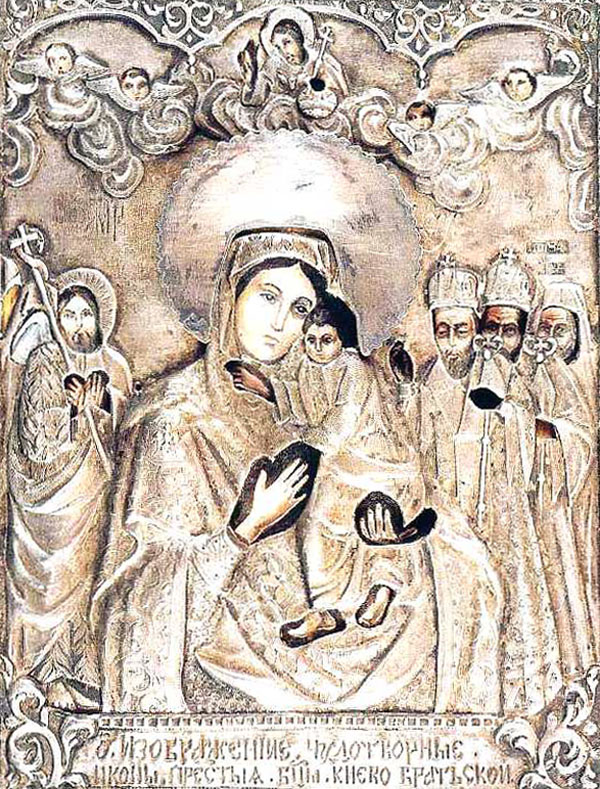
L'icône
de la Mère de Dieu "DU BUISSON ARDENT" ("NEOPALIMAÏA KOUPINA"), devant
laquelle on prie en particulier lorsqu'ily a des incendies terribles
(1680). (Office et deux acathistes traduits en français par le père
Denis Guillaume au tome IX du Supplément aux Ménées.)
The miracle that Moses witnessed on Sinai in the burning bush /
Foretold your virgin childbearing, O pure Mother. / We the faithful cry
to you: / Rejoice, O truly living bush! / Rejoice, O holy mountain! /
Rejoice, O sanctified expanse and most holy Theotokos!
Kontakion — Tone 4
You showed Moses, O Christ God, / An image of your most pure Mother
/ In the bush that burned yet was not consumed, / For she herself was
not consumed, / When she received in her womb the fire of divinity! /
She remained incorrupt after her pure childbearing! / By her prayers, O
greatly merciful One, / Deliver us from the flame of passions, / And
preserve your people from all harm!
Saint SYMEON, abbé de Garédja en Géorgie, thaumaturge (1777).
Saint ANTHIME l'Aveugle, le nouvel ascète de Céphalonie, fondateur de monastères en plusieurs îles grecques, thaumaturge
(1782).
Saint PARTHENE, higoumène de Kiziltach, martyr (Russie 1867).
Invention
des reliques de saint Joasaph de Belgorod (Russie 1911). (Office et
acathiste traduits en français par le père Denis Guillaume au tome XVI
du Supplément aux Ménées.)
Saint ANDRE, évêque d'Oufa, martyr par la main des Communistes (Russie 1937).
Saints
PAUL, JEAN, NICOLAS, NICOLAS, JEAN, NICOLAS, ALEXANDRE, PIERRE et
MICHEL, prêtres, ETIENNE, moine, et BASILE, PIERRE, ETIENNE et
ALEXANDRE, laïques, martyrs par la main des Communistes (Russie 1937).
Saint
PIERRE (Zimonjic), métropolite de Sarajevo, martyr par la main des
Catholiques-Romains qui l'égorgèrent au camp de concentration de
Jasenovac (Croatie 1941).
Saint
GORAZD (Pavlik), restaurateur de l'Orthodoxie dans les pays tchèques et
la Slovaquie, évêque de Bohême, Moravie et Silésie, martyr par la main
des Nationaux-Socialistes (Tchécoslovaquie 1942).







 Saint ANTHIME l'Aveugle, le nouvel ascète de Céphalonie, fondateur de monastères en plusieurs îles grecques, thaumaturge
(1782).
Saint ANTHIME l'Aveugle, le nouvel ascète de Céphalonie, fondateur de monastères en plusieurs îles grecques, thaumaturge
(1782). 


