lunedì 3 giugno 2019

4 giugnoSt. Metrophanes the first Patriarch of Constantinople


VESPRO e MATTUTINO greco- italiano del 4 giugno Memoria del nostro santo padre Mitrofane, arcivescovo di Costantinopoli.

http://www.ortodossia.it/w/media/com_form2content/documents/c17/a1428/f255/Vespro%20e%20Mattutino%20del%204%20giugno.pdf


Saint METROPHANE, archevêque de Constantinople (314). (Office traduit en français par le père Denis Guillaume au tome VI des Ménées. Office plus complet traduit en français par le père Denis Guillaume au tome VI du Supplément aux Ménées.)


Troparion — Tone 1

You proclaimed the great mystery of the Trinity, O good shepherd, / And manifested Christ’s dispensation to all, / Dispersing the spiritual wolves who menaced your rational flock, / Saving the lambs of Christ who cry: / Glory to him who has strengthened you! / Glory to him who has exalted you! / Glory to him who through you has fortified theOrthodox Faith!

Troparion — Tone 4

In truth you were revealed to your flock as a rule of faith, / an image of humility and a teacher of abstinence; / your humility exalted you; your poverty enriched you. / Hierarch Father Metrophanes, / entreat Christ our God that our souls may be saved.

Kontakion — Tone 2

You clearly taught the faith of Christ, / and by keeping it you truly increased your faithful flock to a multitude; / and so, Metrophanes, you now rejoice with the angels and unceasingly intercede for us all.


sabato 1 giugno 2019

Saint NICEPHORE le Confesseur, patriarche oecuménique de Constantinople (805-815),


Saint NICEPHORE le Confesseur, patriarche oecuménique de Constantinople (805-815), qui souffrit pour la cause des saintes Icônes sous Léon l'Arménien (829). (Office traduit en français par le père Denis Guillaume au tome VI des Ménées.) 


Troparion — Tone 3

Through your inspired confession, / you gained victory for the Church, holy Hierarch Nicephorus. / You suffered unjust exile / because of your reverence for the icon of God the Word. / Righteous Father, entreat Christ our God to grant us His great mercy.

Kontakion — Tone 4

Podoben: “Today You have shown forth...” / Since you have received from God in heaven / a crown of victory, gloriousNicephorus, / save those who faithfully honor you as a hierarch of Christ and a teacher.

venerdì 29 marzo 2019

27 Marzo S. Rupert of Salzburg-modesto elogio iconografico


Saint RUPERT ou ROBERT, évêque de Worms, puis de Salzbourg, apôtre de la Bavière (718). fu anch'egli un tipico rappresentante dei " monaci irlandesi" itineranti.
S. Ruperto discendeva dai Robertini o Rupertini, un'importante famiglia che dominava col titolo di conte nella regione del medio e alto Reno. Da questa famiglia nacque anche un altro S. Ruperto (o Roberto), di Bingen, la cui vita venne scritta da S. Ildegarda. I Robertini erano imparentati con i Carolingi e centro della loro attività era Worms. Qui S. Ruperto ricevette la sua formazione di stampo monastico irlandese. Verso il 700, come i suoi maestri, si sentì spinto alla predicazione e alla testimonianza monastica itinerante e si recò perciò in Baviera, ottenendo buoni risultati a Regensburg e Lorch. Appoggiato dal conte Theodo di Baviera, sul lago Waller, 10 km a nord-est di Salisburgo, là dove ora è Seekirchen, fondò una chiesa, dedicata a S. Pietro. Ma il luogo non appariva adatto ai progetti di S. Ruperto che chiese al conte un altro territorio sul fiume Salzach, nei pressi dell'antica e cadente città romana di Juvavum.


Immagine correlata

St. Rupert (Robert), Archbishop of Salzburg, Apostle of Bavaria & Austria (27th March) From a noble Frankish family, he was appointed bishop of Worms, Germany, dedicated himself to spreading the faith among Germans. With patronage of Duke Thedo of Bavaria, he took over the deserted town of luvavum about 697, (Salzburg, Austria). He founded a church, monastery, & school; brought in groups of missionaries; established a nunnery at Nonnberg with his sister, Eerentrudis, serving as the first abbess


Immagine correlata


Ruperto è il patrono di Salisburgo. Dopo aver ricevuto una formazione monastica irlandese, infatti, attorno al 700 si recò in Baviera dove si dedicò alla predicazione e alla testimonianza monastica itinerante, ottenendo buoni risultati a Regensburg e Lorch. Con l'appoggio del conte Theodo di Baviera, Ruperto fondò prima una chiesa dedicata a san Pietro sul lago Waller e poi un monastero sul fiume Salzach, nei pressi dell'antica città romana di Juvavum. Fu questo il nucleo della nuova Salisburgo («la città del sale»), che lo riconosce non solo come primo vescovo ma anche come ri-fondatore. L'iconografia lo rappresenta, infatti, con un barile o un secchio pieno di sale. Morì il 27 marzo, il giorno di Pasqua, dell'anno 718.


domenica 24 marzo 2019

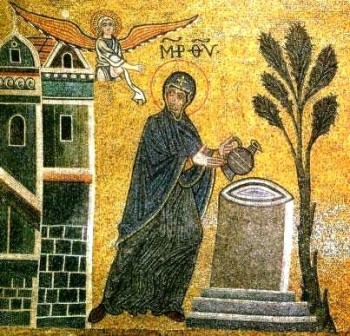
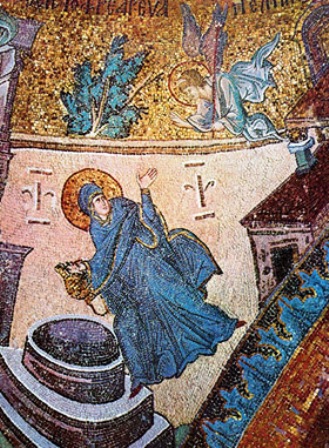
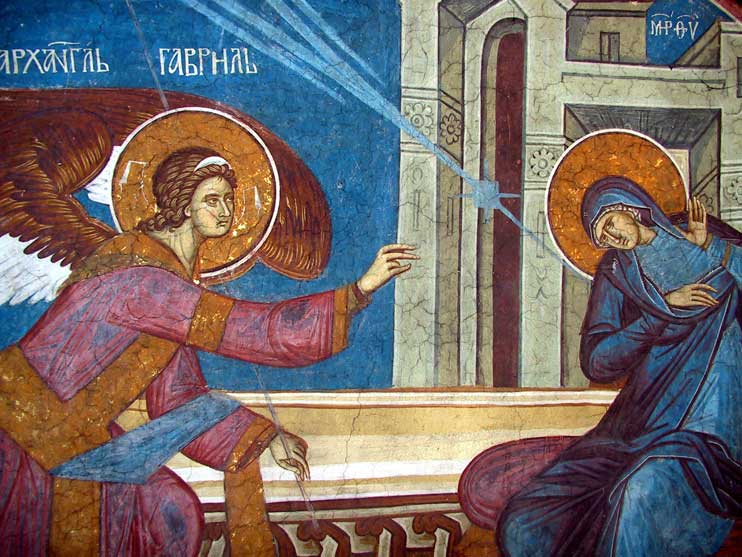
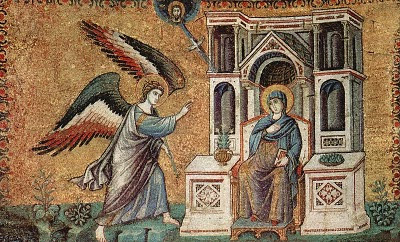
25 Marzo ancora elogio iconografico Festa dell'Annunciazione


L'Αnnunciazione della Santissima Madre di Dio. Affresco bizantino dell XII-XIII secolo. Cripta di San Biagio – San Vito dei Normanni (Br).


La Vergine Maria, particolare dell’Annunciazione


Anonimo, Basilica di San Marco a Venezia, Annunciazione


Anonimo, Chiesa della Chora a Istanbul, Euangelismos


Risultati immagini per icoane buna vestire


http://ilpalazzodisichelgaita.files.wordpress.com/2011/11/annunciazione.jpg


https://www.google.com/search?safe=strict&rlz=1C5CHFA_enIT807IT807&q=icoane+buna+vestire&tbm=isch&source=univ&sa=X&ved=2ahUKEwi2oOOZipvhAhUuMuwKHWarC5IQsAR6BAgJEAE&biw=1023&bih=526#imgrc=z2wOLLmNzkq3hM:


https://blogger.googleusercontent.com/img/b/R29vZ2xl/AVvXsEjRjEQv3AlaOvW-lOJz5xDx75bYFQiZHgDFji3pCnOtrZq0p5TYlrgbxn54gJ26EF3uKUcUZ8p_QuvqpZE1pIlgSIUKY4HBFgcRCrxgTRNOjq5cwYYF2y53iniFNe-W6ADU3l9nat_U8eI/s1600/annunciazione1.jpg